techiners.in

Announcement

Summary of Start Earning Money WIth AI - Free Tools & Business Ideas | Vaibhav Sisinty | FO376 Raj Shamani

Summary of Start Earning Money WIth AI - Free Tools & Business Ideas | Vaibhav Sisinty | FO376 Raj Shamani


Introduction

In this episode of Raj Shamani’s Figuring Out podcast, Vaibhav Sisinty (founder of GrowthSchool) presents practical strategies for leveraging AI to accelerate careers, launch businesses, and streamline content creation.

Key Highlights

AI as a Business Building Block Vaibhav explains how AI empowers solo entrepreneurs to build comprehensive business operations without the need for large teams. Real-world examples illustrate using tools like ChatGPT, Descript, Make.com, Relevance AI, and Google AI to automate everything from planning and content production to marketing and personalized outreach.


A major mindset shift emphasized in the episode is transitioning from creating endless content to architecting systems—automated, evergreen workflows—that convert effort into sustainable income. 

Becoming an AI Generalist 

The speakers advocate for versatility over deep specialization. Vaibhav outlines a roadmap where individuals start by experimenting with AI tools, learn effective prompting, and then craft integrated AI-driven workflows.

Who Can Benefit?
  1. This approach is especially useful for: 
  2. Freelancers aiming to automate client delivery
  3. Coaches and consultants looking to scale content
  4. Bootstrapped startups
  5. Students exploring side hustles
  6. Content creators seeking to systematize their output

Putting It All Together

In just a few hours a day, a solopreneur can harness a stack of AI tools to manage content planning, creation, marketing, personalization, and customer engagement—without needing to hire additional help.

In essence, the video is a powerful guide for anyone looking to "build smarter, not harder" using AI as a co-pilot in launching scalable, efficient, and low-overhead ventures.


Youtube Link: 
https://www.youtube.com/watch?v=0-FUhQKe-eU

P.S.: This summary was 100% generated by AI.

The Evolution of Artificial Intelligence in Everyday Life

Introduction

Artificial Intelligence (AI) has swiftly transcended its futuristic depiction in sci-fi movies to become an integral part of our daily lives. From personalized recommendations on streaming platforms to voice assistants managing our schedules, AI has seamlessly integrated into numerous facets of modern living. The evolution of AI has been a remarkable journey, fundamentally altering how we interact, work, and perceive technology.

Understanding AI's Evolution:

AI's inception traces back to the 1950s when computer scientists initiated research into simulating human intelligence. Initially, AI algorithms were basic, handling logical reasoning and problem-solving. As computational power advanced, so did AI capabilities. Machine learning emerged, enabling systems to learn and improve from data without explicit programming.

AI in Everyday Applications:

Today, AI powers various everyday applications:

Security, Risks and Tips for Credit Cards


Security, Risks and Tips for Credit Cards

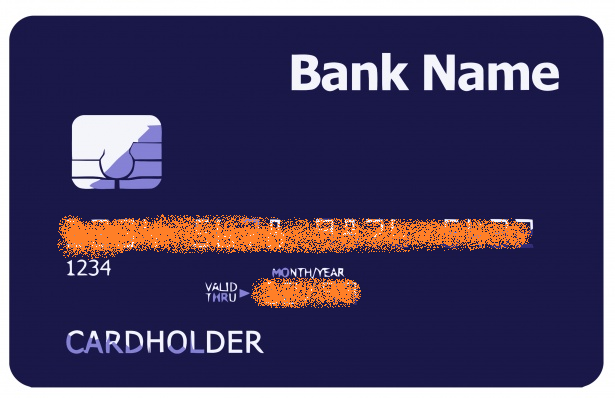
In the previous post we have seen the logic behind a 16 digit credit card numbers. Besides learning and understanding the logic behind a 16 digit credit card number and how much vital information those 16 or more digits conveys, it’s also equally important to safeguard that vital information.

Let’s now delve into the security of credit/debit cards, risk associated with credit/debit cards, and yes the use of credit/debit cards i.e., how can you benefit more by using credit/debit cards.

Credit Card Security:


Card Security

The Logic Behind a Credit Card

logic behind credit or debit card - techiners

 INTRODUCTION


A credit card or a debit card has a unique 16 digit number that every one is aware of. But, do you know these numbers are not just random string of numbers rather it reveals a lot more information than you think.

Ever wondered what that 16 digits code actually represents? How that 16 digits identify the bank and the account from which your money needs to be paid to the billing party?

Let's dive into these 16 digits that we just see a string of random numbers and is often wondering that exactly these numbers are.

Advanced Encryption Standards 256


INTRODUCTION


AES256 is symmetric key algorithm i.e., same Key is used for both encryption and decryption process.

AES256 is a 256 bits encryption/decryption algorithm that encrypts a plain text into a human unreadable format using an encryption key (Key 256 bits) and initialization vector (IV 128 bits). The Key size should be 256 bits and block size should be 128 bits. It uses Cipher Block Chaining (CBC) mode which introduces feedback. Before each plain text block is encrypted, it is combined with the cipher text of the previous block by a bitwise exclusive OR operation. This ensures that if the plain text contains many identical blocks, they will each encrypt to different cipher text block. The initialization vector (IV) is combined with the plain text block by a bitwise exclusive OR operation before the block is encrypted. If a single bit of a cipher text block is mangled, the corresponding plain text block will also be mangled. The padding mode used is PKCS7 i.e., Public Key Cryptography Standards 7 which consists of a sequence of bytes, each of which is equal to the total number of padding bytes added.

ENCRYPTION